The Autism Connect Early (ACE) Programme is an evidence based early support Programme based on gradual and meaningful inclusion. The ACE Programme utilises a transdisciplinary model of therapy to support children in their naturalistic setting, as per the NDIS recommendations for service provision.
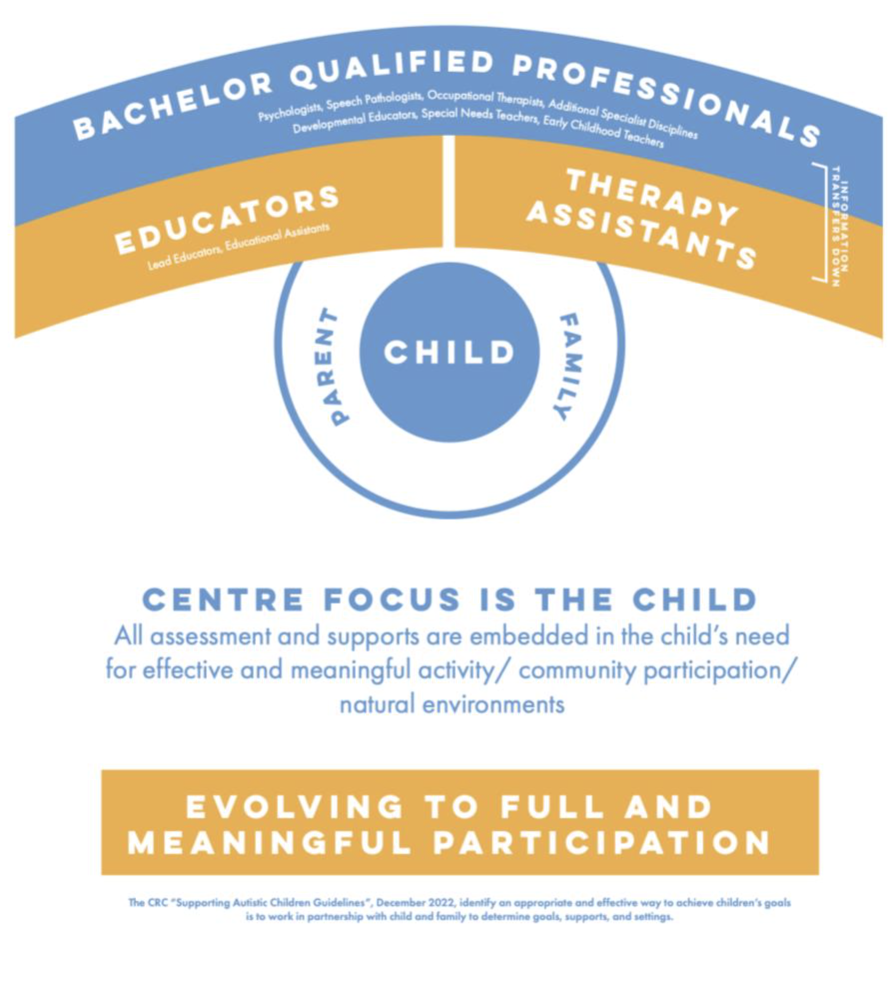
We deliver our intervention in tiers of support, using two distinct tiers, because we know that this is what works best. Within the ACE Programme, professionals (such as occupational therapists, speech pathologists, psychologists, special education teachers or behaviour support practitioners), are responsible for assessing children, identifying children’s support needs, and developing strategies best suited to meeting those identified needs.
The ACE Programme is designed to support children with autism in developing essential skills for daily life. Using structured routines, sensory-friendly environments, and tailored learning strategies, ACE empowers children to communicate, engage, and thrive.
Designed specifically to support communication, sensory needs, and social engagement in a structured environment.
Parents and caregivers receive expert guidance to help reinforce learning beyond therapy sessions
Each child follows an individualised plan tailored to their developmental needs and strengths.
The Key
Predictable Learning Environment
The ACE Studio provides a consistent and structured setting, reducing anxiety and enhancing focus for autistic children.
Sensory Integration Support
Tailored sensory experiences help children process information effectively, improving attention and coordination.
Individualised Learning Plans
Personalised strategies address each child’s unique needs, fostering autonomy and competence in their development.
Family Centred Approach
Engaging families in the therapeutic process ensures consistent support across environments, enhancing overall progress
Evidence-Based Practices
Incorporating proven methodologies ensures that interventions are effective and aligned with the latest autism research.
ACE Incorporates
Structured and predictable routines
Environments that can accommodate different sensory preferences
High adult to child ratios (1 adult to 2 children – 1 adult to 4 children)
Individualised sensory motor programme
Small group times
Individualised goals set across 10 key developmental domains
Termly Individual Education Plan (IEP) for each child, developed with families and based on each child’s strengths and individual differences.
Intentional opportunities for meaningful participation
Individualised, therapist informed strategies to work towards goal mastery
Parents and caregiver access to expert guidance to help children generalise their skill development beyond the ACE Programme and into the home and community settings
Therapeutic supports delivered by a transdisciplinary team of therapists and therapy assistants across varied environments (early childhood setting, therapy centre, or home environment)
NDIS funding may be available for therapeutic supports
The programme is continuously refined through ongoing research and feedback, ensuring it meets the evolving needs of each child and family.
ACE is a comprehensive early intervention programme embedded within long-day care settings. It focuses on:
Enhancing communication and social interaction skills
Promoting self-directed learning and resilience
Facilitating gradual and meaningful inclusion with typically developing peers
Providing sensory-friendly environments tailored to individual needs
Programme Overview
The Autism Connect Early (ACE) Programme is an evidence based early support Programme based on gradual and meaningful inclusion. The ACE Programme utilises a transdisciplinary model of therapy to support children in their naturalistic setting, as per the NDIS recommendations for service provision.
We deliver our intervention in tiers of support, using two distinct tiers, because we know that this is what works best. Within the ACE Programme, professionals (such as occupational therapists, speech pathologists, psychologists, special education teachers or behaviour support practitioners), are responsible for assessing children, identifying children’s support needs, and developing strategies best suited to meeting those identified needs.
ACE Programme Core Routines
Sensory Motor Programme
Whole group and individualised experiences developed by an occupational therapist, that support the development of body awareness, coordination, balance, and regulation through movement, touch, and play-based experiences.
Food Exploration
We offer child-led, and play-based daily opportunities for children to engage with a variety of foods in non-traditional ways. This approach can assist children to build confidence, curiosity, and comfort around mealtimes, whilst reducing any pressure to eat less preferred foods.
Meaningful Participation
Children are supported to participate in developmentally appropriate experiences in the wider centre community, that are meaningful and motivating. This looks slightly different for each child, depending on their interests and regulation support needs.
Facilitated social emotional small groups
Our small group experiences are intentionally planned to facilitate supported interactions that foster connection, cooperation, turn-taking, and early social understanding in a safe and responsive environment.
Understanding emotions and sensory preferences
Understanding emotions and sensory preferences
Throughout daily interactions, and intentional experiences, children are supported to recognise and make sense of their feelings and sensory preferences, with gentle guidance, visual support and affirming language.
supported emotional regulation
We recognise that without a state of well-regulation, children are unable to fully engage in play, learning, or skill development. To support this, children are encouraged and guided to meet their sensory needs throughout the day. Our team plays a key role in providing responsive, compassionate support to foster co-regulation and ensure every child feels safe, calm, and ready to thrive.
Progressing early play skills
Intentional experiences are planned to help children develop their play skills. This ranges from using early engagement strategies to develop exploratory and parallel play through to developing shared and imaginative play, with adult facilitation as needed.
supported toileting
We offer child-led, and play-based daily opportunities for children to engage with a variety of foods in non-traditional ways. This approach can assist children to build confidence, curiosity, and comfort around mealtimes, whilst reducing any pressure to eat less preferred foods.
music and movement
Each day we offer children the opportunity to engage in joyful, rhythmic experiences that encourage self-expression, coordination, body awareness, and group participation.
embedded multimodal communication
The use of visuals, gestures, key word signs, aac, and spoken language are incorporated into each interaction, to ensure every child can understand and express themselves effectively.
responsive meal times
Responsive meal times
Our meal times are flexible to offer calm, social, and child-centred eating experiences that honour children’s autonomy, sensory preferences, and social communication opportunities.
Intentional Experiences
Our fortnightly programme is carefully developed to include experiences that target developmental goals while following children’s interests, strengths, and emerging skills.